Conelly: A Natural Handwritten Font
There I was, staring at a blank brand board, trying to figure out how to make a new café identity feel fresh yet familiar. The client wanted something that felt personal, like it was handcrafted rather than mass-produced. That’s when I reached for Conelly.
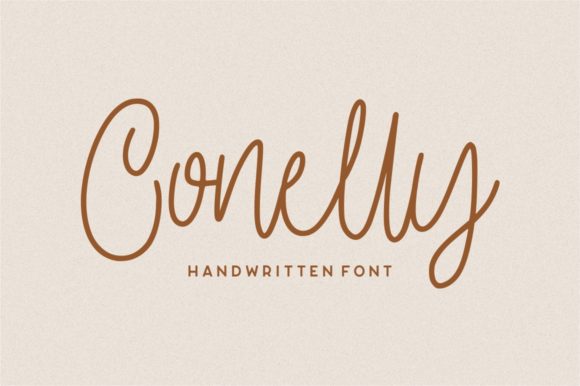
Conelly is a natural modern handwritten font that brings a sense of authenticity to any project. Its strokes are fluid and organic, with subtle variations that mimic the way a human hand moves across a page. It doesn’t feel stiff or overly stylized, which makes it perfect for brands looking to convey warmth and approachability.
Visual Characteristics and Personality
Conelly has a distinct personality—friendly, creative, and slightly playful. It’s not the kind of font you’d use for a corporate annual report, but it works wonders for boutique shops, artisanal products, and small businesses that want to stand out. The font feels like it was written with a pen, giving it a tactile quality that digital fonts often lack.
The letterforms have a softness that makes them inviting, while the slight irregularity in the shapes adds character. It’s a font that can be both elegant and casual, depending on how you use it. Whether you’re designing a logo or a social media graphic, Conelly has a way of making your work feel more human.
Real-World Testing: From Logo to Social Media
I tested Conelly on a variety of design assets, starting with a logo concept. It worked well as a headline font, adding a personal touch without overwhelming the design. When paired with a simple sans serif for the tagline, it created a balanced contrast that felt modern yet grounded.
On a packaging mockup, Conelly gave the product a handmade feel that resonated with the target audience. The font looked great on a label, where its organic flow complemented the imagery and color scheme. It also held up well on a business card, where its legibility wasn’t compromised by the small size.
For a website header, Conelly added a unique visual flair that made the homepage stand out. It didn’t overpower the content, but it did catch the eye and set the tone for the brand. On social media layouts, it worked equally well—whether as a caption, a post title, or a branded hashtag.
Strengths and Limitations
One of Conelly’s greatest strengths is its versatility. It can be used as a display font, a logo font, or even an accent font in a broader typography system. It pairs well with both serif and sans serif fonts, allowing for creative combinations that feel cohesive and intentional.
However, it’s not ideal for long body text. At smaller sizes or in dense paragraphs, the font can become difficult to read. This makes it better suited for headlines, titles, and short phrases rather than extended blocks of copy. It also isn’t the best choice for formal or high-stakes projects where a more rigid typeface might be expected.
That said, when used appropriately, Conelly can add a level of charm and uniqueness that other fonts might not offer. It’s especially effective in branding projects that aim to communicate authenticity, creativity, or a personal touch.
Practical Guidance for Designers
If you’re considering using Conelly in your next project, it’s worth testing it in different contexts before finalizing your design. Try it on a shop sign, a product mockup, or a printed card to see how it holds up in real-world applications. Pay attention to how it looks at various sizes and in different environments.
When pairing Conelly with other fonts, look for complementary styles. A clean serif or sans serif can balance its organic feel, while another script font might create a more dynamic effect. Experiment with weights and styles if available, as they can open up new design possibilities.
Before using Conelly in client work, always check the commercial licensing terms. Make sure the font is properly licensed for the intended use, whether it’s for a website, print materials, or digital products. This helps avoid legal issues down the line.
Conelly is a premium font that offers a fresh alternative to more traditional script or handwritten typefaces. It’s a great choice for designers who want to add a personal, authentic touch to their work without sacrificing style or readability.